
2 min read
Most disputes between cleaning companies and clients aren’t actually about cleaning quality — they’re about not knowing what happened. Did the crew show up on time? Did they finish the whole checklist, or skip the restrooms because they were running late? Without a record, it’s one person’s word against another’s, and the cleaning company is usually the one who loses that argument by default.
The Honor System Doesn’t Scale
A shared time clock or a paper sign-in sheet works fine when you have three employees and you know all of them personally. It stops working once you have multiple crews across multiple sites, because there’s no way to verify who was actually where, and no way to catch a problem until a client complains days later. By then it’s not a training conversation anymore — it’s a client you might lose.
What a Photo-Verified Time Clock Actually Solves
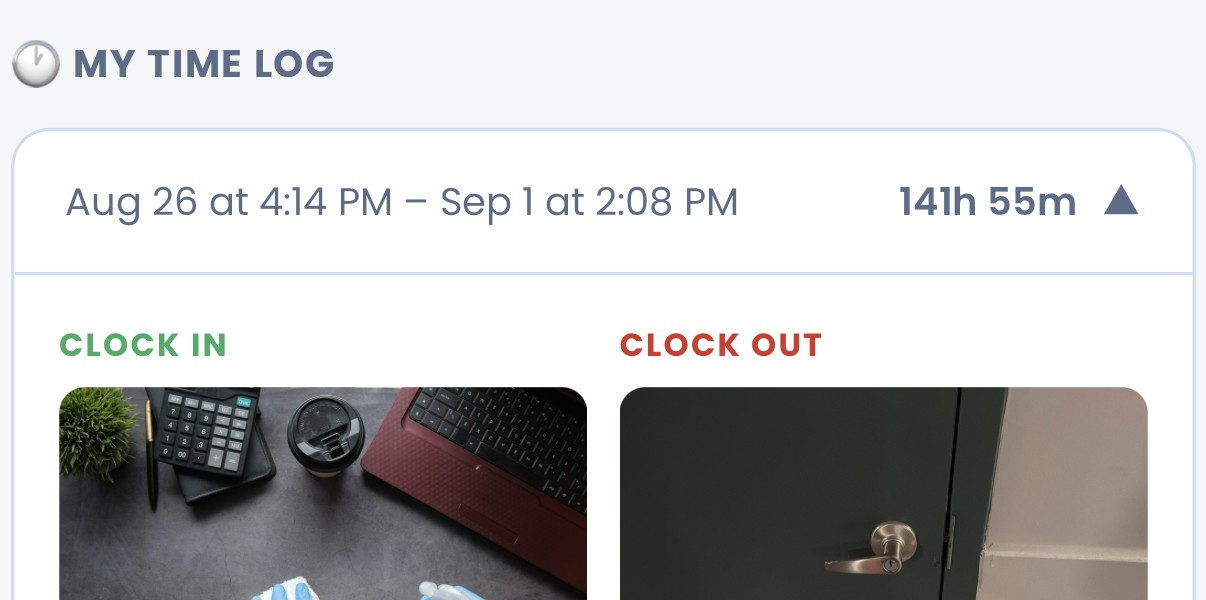
Requiring a photo at clock-in and clock-out does two things a plain time clock can’t: it confirms someone is physically on-site, not just tapping a button from their car, and it creates a real record tied to a specific person and timestamp rather than a shared badge or code anyone could use. It’s not about distrust of your crew — it’s about having something concrete to point to when a client asks what time the crew arrived.
Checklists That Actually Get Checked
A cleaning checklist that lives on a clipboard at the job site gets filled out, filed, and never looked at again. A checklist that’s tied to the job in real time — where each completed item is marked by a specific crew member with a timestamp — does something different: it shows progress as it happens, and it leaves a record showing exactly who marked “restrooms cleaned” and when. If a client asks whether something specific got done, the answer isn’t “let me check with the crew” — it’s already on record.
Accountability Protects Good Crews Too
This isn’t only about catching problems. A crew that does consistently good work benefits from having that documented just as much as a struggling crew needs the visibility. When a client questions whether something got done, a crew member with a clean record of on-time arrivals and completed checklists has an easy answer instead of relying on the client just taking their word for it.
Building the Habit
The tools only work if using them becomes as automatic as clocking in was before. Crews that are guided directly from clock-in to the day’s checklist — rather than having to remember to open a separate app or find a separate list — tend to actually keep the habit instead of treating it as extra paperwork. The goal isn’t more process for its own sake; it’s making the record-keeping happen as a side effect of doing the job normally.
Ready to give your clients a portal like this?
Live in minutes, no developer required. 14-day free trial, no card required.
Start Free Trial See Pricing
Leave a Reply