
3 min read
Paper checklists have been a staple of the cleaning industry for decades, but they come with serious vulnerabilities that most cleaning company owners don’t fully appreciate until something goes wrong. Understanding what digital checklists actually prevent—not just enable—can help you make a more informed decision about your operational tools.
The Hidden Costs of Paper Trail Gaps
When a client calls to say a task wasn’t completed, paper checklists rarely settle the dispute. A checkmark on paper proves someone made a mark, not that the work was done. This creates a he-said-she-said situation that damages client relationships and leaves you with no defendable documentation. Digital checklists with photo verification prevent this ambiguity entirely by requiring visual proof at the point of completion.
More importantly, paper creates a delay in discovering problems. You might not see a missed task until days later when the checklist makes it back to the office—long after the client has noticed and formed a negative impression. Digital systems prevent this communication lag by surfacing issues in real-time, allowing you to dispatch someone to correct the problem before the client even picks up the phone.
Preventing Training Fade and Inconsistency
Every cleaning business experiences crew turnover. Paper checklists prevent nothing when it comes to quality drift over time. A new crew member might interpret “clean breakroom” very differently than your veterans do, and a paper list offers no guidance beyond the text itself.
Digital checklists can include embedded photos showing what “done” looks like, detailed task notes that appear when needed, and client-specific instructions that prevent the common mistake of applying one building’s preferences to another. This structure prevents the gradual erosion of standards that happens when institutional knowledge walks out the door with departing employees.
Stopping Revenue Leakage from Unbilled Work
Paper checklists don’t prevent scope creep—they enable it. When a crew member adds a quick task to help a client, it often goes undocumented and unbilled. Over months, these small favors add up to significant revenue loss. A digital system prevents this by making it easy to flag additional work performed, creating a record you can reference during billing or contract renewal discussions.
The same principle applies to supply usage. Paper can’t prevent the disconnect between what gets used and what gets reordered. Crew members who notice a supply running low have no good mechanism to communicate that need, leading to last-minute emergency purchases or worse, running out mid-job. Digital checklists that allow supply flagging prevent these operational disruptions.
Preventing Time Theft and Schedule Confusion
Paper sign-in sheets prevent absolutely nothing when it comes to time accuracy. They’re easily falsified, often rounded, and provide no location verification. Digital time clocks with photo verification prevent buddy punching and confirm crews are actually on-site. This isn’t about distrust—it’s about having accurate data for payroll, client billing, and labor cost analysis.
Recurring schedule mistakes are another problem paper fails to prevent. When schedules live on paper or in someone’s head, changes get lost and crews show up on the wrong days. Digital scheduling set once and reused prevents these miscommunications while making it easy to accommodate one-time adjustments without disrupting the pattern.
Building Systems That Scale
Perhaps most critically, paper checklists prevent growth. They don’t scale beyond the number of jobs you can personally oversee. As your business grows, you need systems that prevent problems automatically rather than relying on your constant presence.
Modern tools like CustodialView address these prevention needs through features specifically designed for cleaning operations—photo check-ins that prove task completion, role-based client portals that prevent communication breakdowns, and real-time visibility that prevents small issues from becoming client complaints. With pricing starting at $29 per month and a 14-day trial that requires no credit card, the barrier to moving from reactive paper systems to preventive digital tools has never been lower.
The question isn’t whether digital checklists offer benefits—it’s whether you can afford what paper checklists fail to prevent.
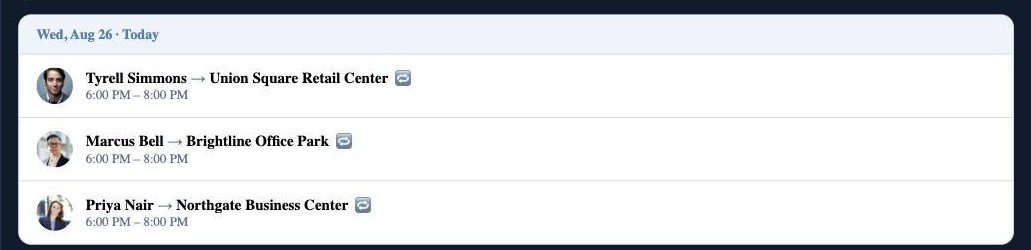
Ready to give your clients a portal like this?
Live in minutes, no developer required. 14-day free trial, no card required.
Start Free Trial See Pricing
Leave a Reply