4 min read
Landing a new cleaning contract is exciting, but the first message you send sets the tone for the entire relationship. A well-crafted onboarding message demonstrates professionalism, clarifies expectations, and helps prevent the small misunderstandings that can grow into larger problems down the road.
Here’s what every client onboarding message should include to start the relationship on the right foot.
Express Appreciation and Confirm the Basics
Start by thanking the client for their business. A simple acknowledgment goes a long way toward building rapport. Follow this with a clear confirmation of the service details: start date, frequency, specific areas to be cleaned, and any special requests discussed during the sales process. This written confirmation protects both parties and ensures everyone is aligned from day one.
Include the name and contact information of the crew leader or account manager who will be their primary point of contact. Clients appreciate knowing exactly who to reach when they have questions or concerns.
Outline Communication Channels and Response Times
Be explicit about how clients can reach you. Will they text, email, call, or use a client portal? What’s your typical response time during business hours versus after hours or on weekends? Setting these expectations upfront prevents frustration when a client expects an immediate response at 9 PM on a Saturday.
If you have an emergency protocol for urgent issues like flooding or security concerns, explain it clearly. Clients need to know the difference between “please refill the soap dispensers” and “there’s water coming from the ceiling.”
Explain Access Procedures and Security
Access logistics can be surprisingly complex. Detail exactly how your crew will enter the building: key pickup location and return, alarm codes, keycard procedures, or door codes. If the client needs to leave a door unlocked, confirm the specific door and timeframe.
Address your security protocols. Will crew members have photo IDs? Do you conduct background checks? Are crews trained on data privacy if they’re working around sensitive documents? Commercial clients especially want reassurance that their space is in trustworthy hands.
Clarify Billing and Payment Terms
Include your invoice schedule, payment terms, accepted payment methods, and any late payment policies. If you require a first-and-last-month payment or deposit, confirm what you’ve already received. Being transparent about money matters from the beginning prevents awkward conversations later.
Mention if you have automatic billing options or preferred payment platforms. The easier you make it for clients to pay, the faster you’ll get paid.
Set Expectations for Quality Assurance
Explain your quality control process. Will you conduct periodic inspections? How should clients report concerns about cleaning quality? What’s your response protocol when something doesn’t meet expectations?
Good cleaning companies want to hear about problems so they can fix them. Make it clear that you welcome feedback and have a system for addressing it promptly. This reassures clients that they won’t be stuck with subpar service if something goes wrong.
Provide Documentation and Next Steps
Attach or reference any important documents: signed contract, insurance certificates, scope of work checklist, or Material Safety Data Sheets if the client has requested them. Having everything in one place makes it easy for clients to reference later.
Close with clear next steps: “Our crew will arrive Monday at 6 PM and complete a walkthrough” or “Please reply to confirm you’ve received the building access codes.” This action item ensures the conversation doesn’t end in ambiguity.
Consider a Digital Solution
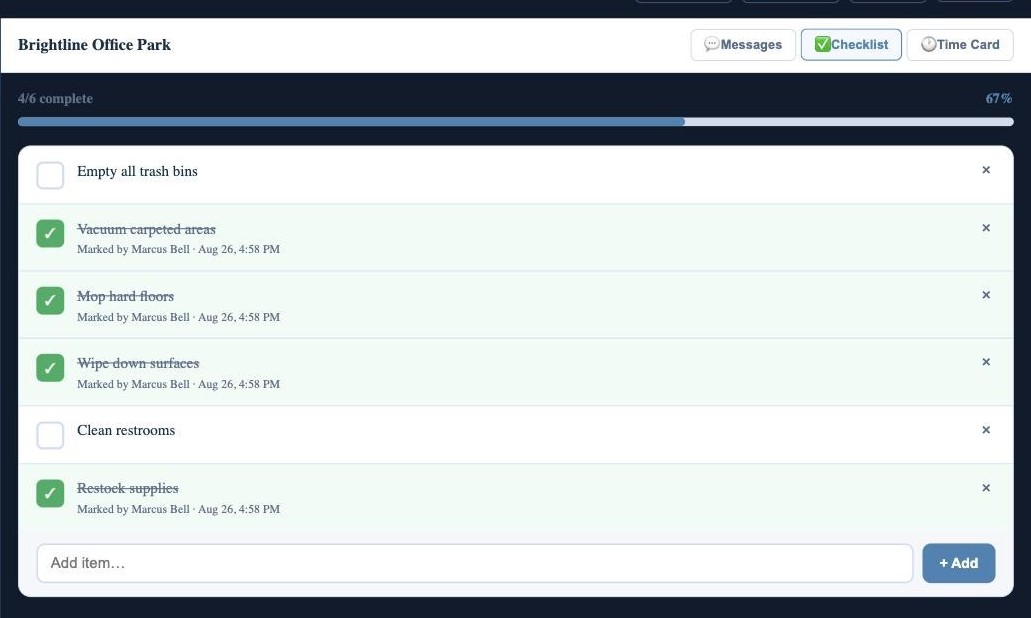
While you can certainly manage client communications through email and phone calls, many cleaning companies find that a dedicated client portal streamlines onboarding and ongoing communication. Real-time visibility into scheduled cleanings, photo check-ins that verify work completion, and centralized messaging keep everyone informed without constant back-and-forth.
Tools like CustodialView provide a branded portal where clients can log in to see schedules, review photo documentation, and communicate with your team—all in one place. This level of transparency can differentiate your company in a competitive market, though the fundamentals of clear communication matter most regardless of the tools you use.
A thoughtful onboarding message takes fifteen minutes to write but can save hours of confusion and frustration over the life of a contract. Invest the time upfront, and you’ll build stronger, longer-lasting client relationships.
Ready to give your clients a portal like this?
Live in minutes, no developer required. 14-day free trial, no card required.
Start Free Trial See Pricing
Leave a Reply